

If you were there in 1976, your memory matters
Fifty years ago, the country threw itself a 200th birthday party. You remember a piece of it that no one else on earth does. Here’s how to keep it.

It’s the morning of July 5th, 1976.
The parade is over. The fireworks are spent shells in the community park and the sparkler ends are littered on the sidewalk. The biggest birthday party the country had ever thrown is over, and the morning after feels the way every morning after feels after a big event— is it over already?
You didn’t know it then, but you were holding something that morning. You’re still holding it now.
Fifty years to the day, here we are again. America turned 250 yesterday. And if you lived through the last one, you’ve spent this whole year the way I have — remembering. The neighbor who went overboard. The song that wouldn’t leave your head. School House Rock. The painted fire hydrants. The smell of the cook out. Whatever the thing was for you.
Today is about remembering and witnessing. I’ll go first, because I’m asking you to do something and it isn’t fair to ask without going first.
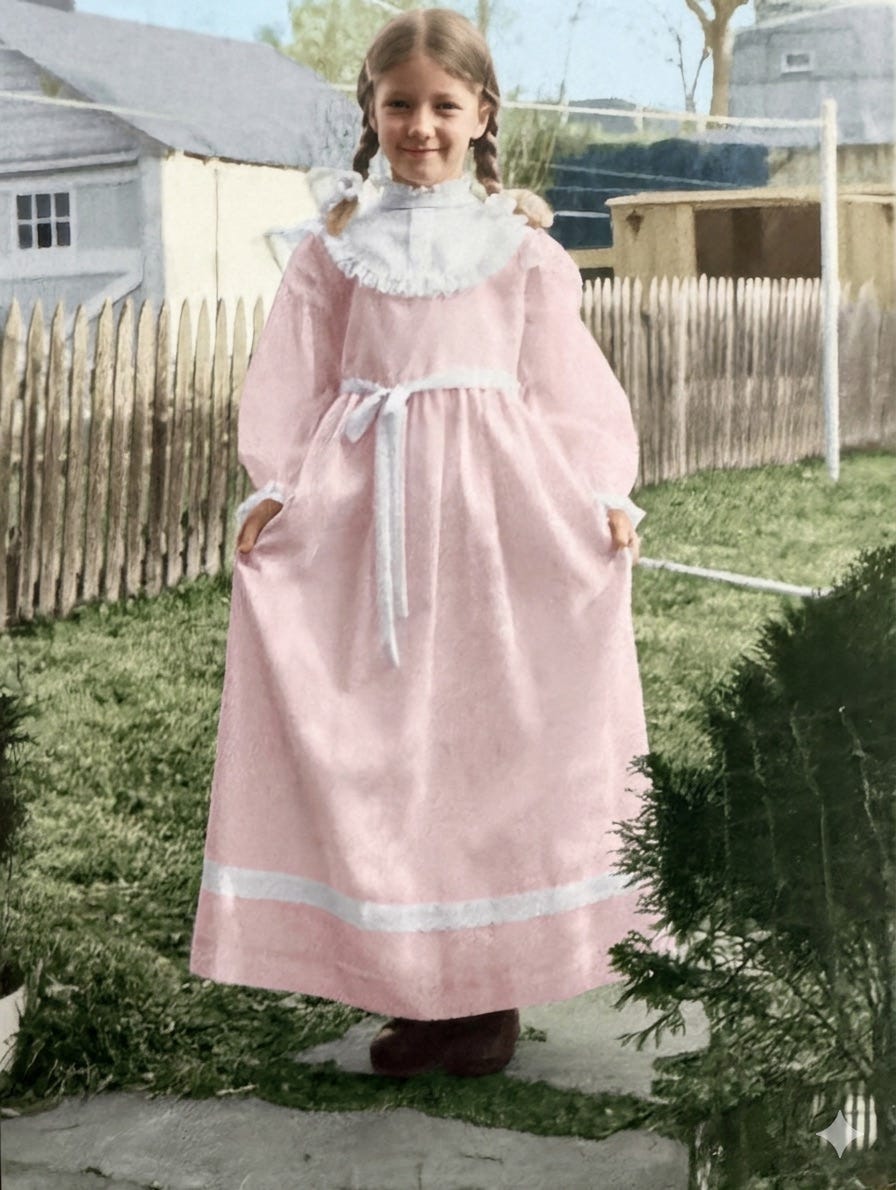
I was eight years old. I got to visit the Bicentennial Wagon Train. They let us climb up into it three kids at a time. I remember the smell of the canvas and the feel of the rough wood of the seats. That’s the thing that stayed. The smell of the canvas, warm from the sun, and the hard wooden seat under me, and thinking for just a second that I was going across the country.
That’s it. That’s the whole memory. It isn’t a story. It’s a smell and a seat and a half-second of a feeling.
And here’s what I’ve learned doing this memory keeping for a year: that’s exactly enough. The small ones are the real ones. Nobody needs your essay on what America means. They need the canvas. They need your version of the canvas — the one detail that comes back the second you stop reaching for the big picture and just stand still in one moment and look around.
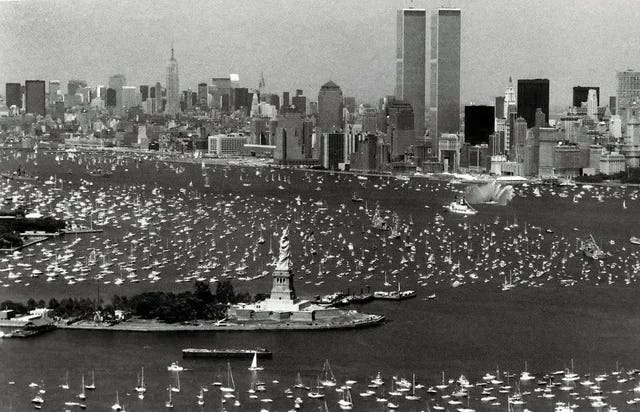
So let’s stand still for a second. Where were you?
Not “where were you in 1976” — that’s too big, you can’t answer that. I mean: pick one moment. The curb you sat on. The kitchen you were standing in. The backseat of the car. Put yourself there and look around, the way you’d look around a room you just walked into. What’s the first thing you see?
That’s the whole trick. You don’t summon the memory. You stand in one spot and let it gather around you.
When you’ve got it — when you can see one specific moment — write down three sentences. Not good ones. Ugly ones. Don’t make it nice, don’t explain what it meant, don’t tell me it was a simpler time. Just put down what was there. What you saw, what you heard, what it smelled like, who was in the room. Three sentences. Mine were the canvas, the seat, the going-somewhere. Yours are sitting right there waiting.
That’s how you save a memory. And a saved memory shouldn’t sit in a drawer.
So what do you do with a memory?
For the last year, this newsletter has been the place those memories came. Starting today, I want to give you somewhere they can live for good, long time now that this project has wound down. Real archives such as The Library of Congress, the official 250th story collection, and your own county historical society (which is very likely sitting there right now wishing someone would send them memories).
I’ve put the whole thing together: how to find the memory, how to write it down without being a writer, and exactly where to send it so it lasts into a small kit. It’s called the Bicentennial Memory Project Toolkit.
→ Get the Toolkit here (click here)
It’s my parting gift, because this project is finishing, and this is the right way to finish it: not by holding onto your memories, but by handing you the tools to put them somewhere permanent yourself.
You were there and your memories matter. Record them and place it somewhere it’ll outlast all of us.
Did You Know?
The wagons didn’t leave when the party did. The Bicentennial Wagon Train’s wagons stayed on display at Valley Forge through September 30, 1976 — almost three months after the Fourth. The celebration ended; the wagons lingered.
Most Bicentennial memories were never written down. There was no app, no organized effort, no easy way to save a moment. Which means fifty years later, the only copy of your 1976 is still inside you.
A lot of 1976 already vanished. Town committee records, local newspaper photos, the program from your school pageant… much of it was thrown out years ago. The personal memory in your head may now be the last surviving record of things that really happened.
Yesterday America turned 250, and someday someone will ask you what that was like, too. Take a moment and record what you did this weekend too. But first, the last one. You were there for the last one. Let’s make sure that’s on the record before it’s gone.
Thank you for following along with this community memory project for the past year. You might enjoy reading coverage of the project in the news or our most read post (it surprised me it was this one!) before you go.
Now go save those memories!
—Denyse
Bicentennial Memory Project
The Bicentennial Memory Project ran original posts on Sundays from July 2025-July 2026. If you have a memory from 1976 — something you saw, something your family did, something you found in the attic — I created a kit to help you write, share, and save it.